
Aircraft Maintenance Engineer
The Quick Pitch:
The ultimate mechanical guardians. If a plane doesn't get signed off by an AME, it doesn't leave the ground — period.
What's the Job Like?
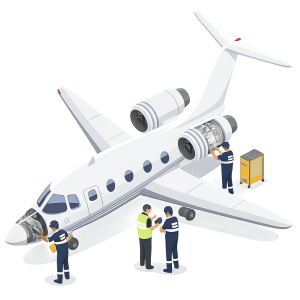
AMEs inspect, diagnose, repair, test, and maintain aircraft so that every flight begins with an aircraft that is technically safe and properly released for service. They can work on jet engines, airframes, landing gear, hydraulics, flight controls, electrical systems, avionics, cabin systems, and many other components. Some work on the aircraft every day on the airport ramp, while others specialize in heavy base maintenance or component workshops. The work requires precision because even a small defect can affect the reliability or safety of an aircraft.
Rule #1: AMEs always follow strict, official manufacturer manuals, approved maintenance data, company procedures, and civil aviation regulations. Guesswork is never allowed. Every inspection, measurement, replacement, test, and repair must be performed using the correct approved procedure and properly recorded.
License Levels (EASA Part-66):
To work on commercial jets in Europe, you earn licenses based on what you do:
· Category A: Basic routine line maintenance and permitted defect fixes, usually performed during normal airline operations with the aircraft spending limited time on the ground.
· Category B1: Mechanical pro — focuses on airframe, engine, mechanical, hydraulic, pneumatic, and electrical systems. B1 engineers are deeply involved in diagnosing and maintaining the physical systems that make the aircraft operate.
· Category B2: Avionics wizard — focuses on electrical and electronic systems such as communication, navigation, instrument, flight-control, and aircraft computer systems. Modern aircraft depend heavily on these systems.
· Category B3: Focused on maintenance of certain small, non-pressurized aircraft within the category’s defined limitations.
· Category C: Base Maintenance Boss — responsible for certification of aircraft after major base-maintenance work, where large inspections and heavy maintenance events may involve many different specialist teams.
How to Get Certified:
1. Pass the required Part-66 knowledge modules: Master subjects such as mathematics, physics, electrical fundamentals, digital techniques, materials and hardware, maintenance practices, aerodynamics, human factors, aviation legislation, and aircraft systems through an approved training center (Part-147) or permitted self-study route.
2. Gain Hands-On Experience: Work under the appropriate supervision on real aircraft and maintenance tasks to build the practical experience required for the licence. Experience matters because knowing the theory is only one part of becoming a competent aircraft maintenance professional.

Aptitude Test
Take this aptitude test to discover whether you have the focus, quick thinking, and multitasking skills needed to become an Aircraft Maintenance Engineer
